

Here’s a riddle: What do beer and lithium have in common?
Both, it turns out, can be produced more sustainably by using a new type of filter made with graphene. At a large brewery, the technology can save millions of gallons of water a year. A variation on the same filter can be used to efficiently extract lithium from places like California’s Salton Sea—or even get lithium out of wastewater from the oil and gas sector.
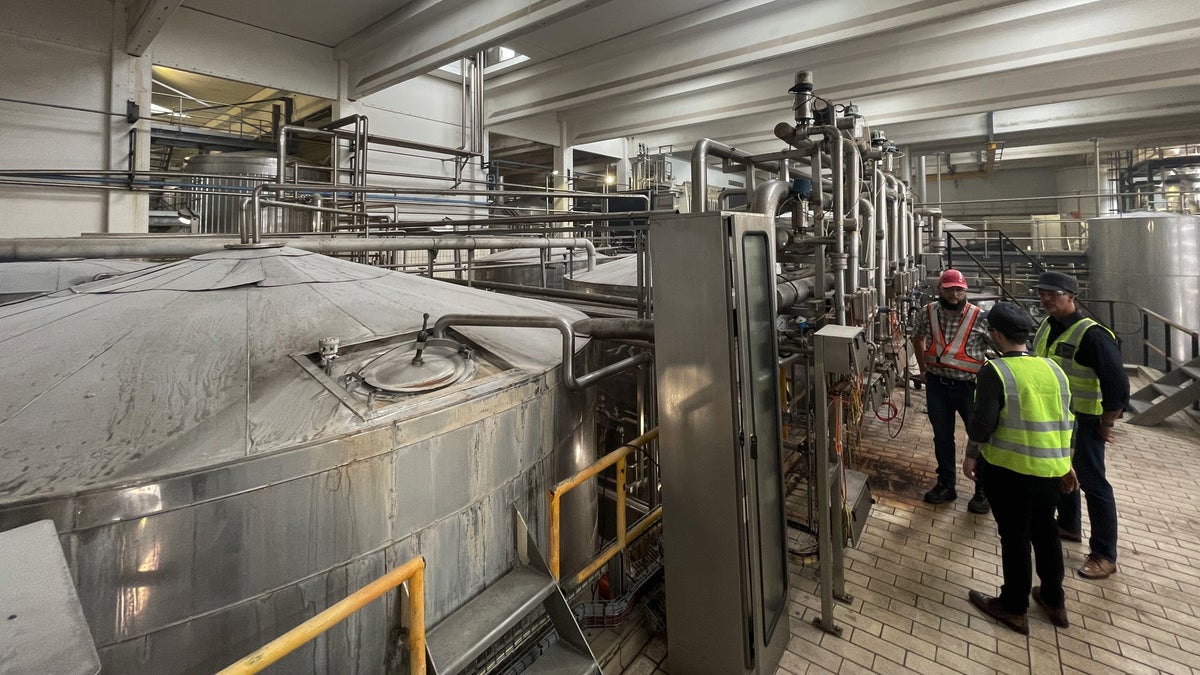
Evove, the U.K.-based company that designed the technology, just finished a pilot demonstrating its use at a large AB InBev brewery in Johannesburg, South Africa. Making beer takes a lot of water: Just sterilizing the equipment in a brewery can mean using thousands of gallons of water every week. That’s especially problematic in a place like drought-prone Johannesburg, where a current water shortage and leaky infrastructure means many people can’t turn on their taps right now.
[Photo: Evove]
Normally, the hot, caustic water used to clean tanks and water lines at a brewery can’t be reused, and ends up in the sewer system. It’s filled with grain residues, sugars, and yeasts that can’t easily be filtered out. “With conventional filters, it just clogs up the filters right away,” says Andrew Walker, Evove’s chief marketing officer.
Typical industrial filters have random variations in pore sizes because of the way they’re manufactured. To make sure things you don’t want are filtered out—like bacteria, in the case of water you want to reuse—the pores have to be so tiny that they can’t effectively work in situations like a brewery where there are lots of different-size particles in the water.
[Photo: Evove]
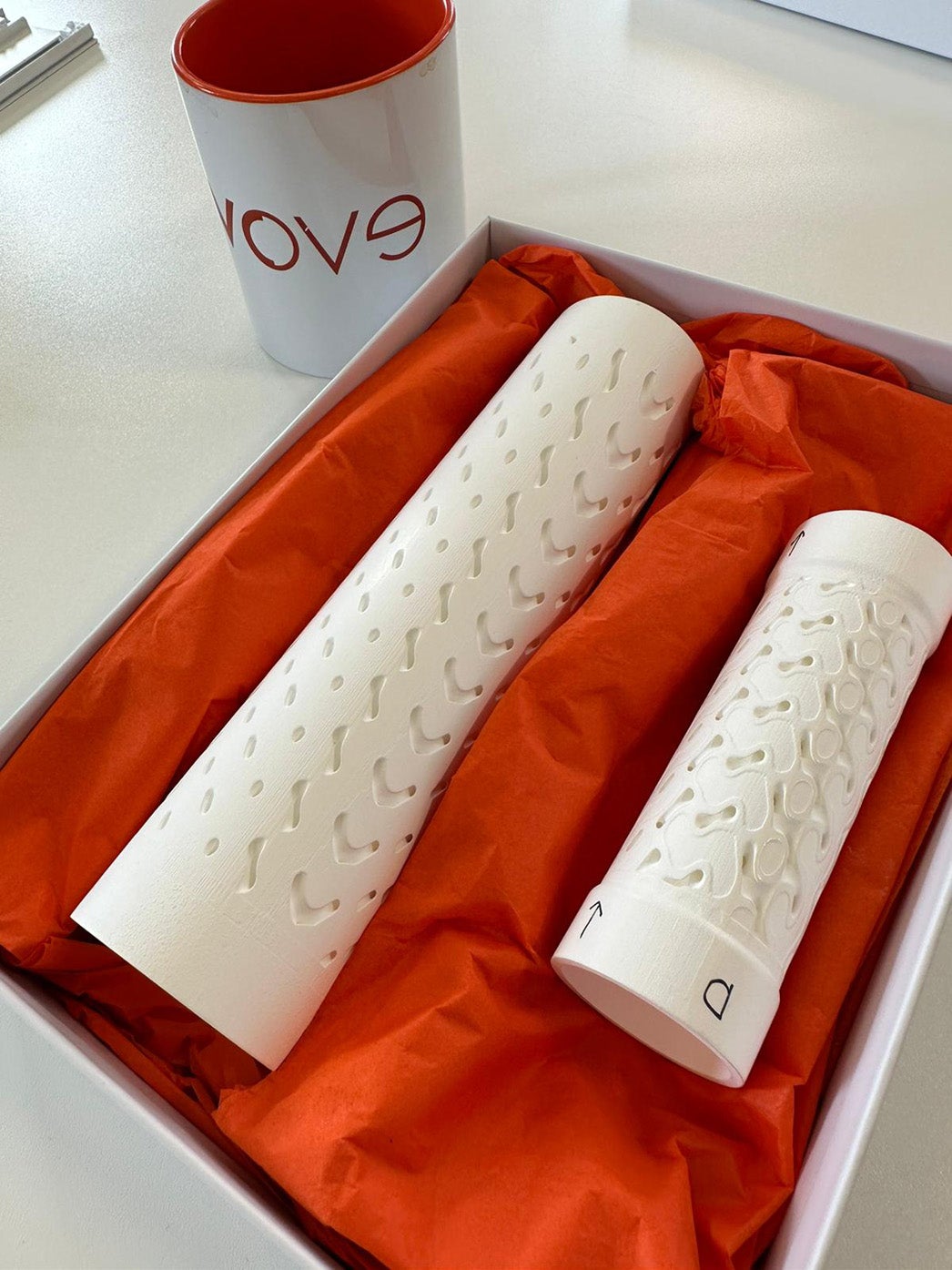
Evove’s design uses advanced materials (like graphene, made from an extra-thin layer of carbon) to coat a membrane and make tiny hexagonal pores that are all exactly the same size. “We can tailor the porosity of those pores to a very specific chemical compound,” says Walker.
At a brewery, that makes it possible to filter out everything but the water itself, so it can be reused; in the pilot, the team demonstrated that the water could be reused for cleaning at least four times, and possibly as many as eight times. The process also saves energy because heat from the hot water can be captured as well.
If the tech was used at all AB InBev’s breweries globally, it could eliminate 6.6 million gallons of water, nearly 2 million kilowatt-hours of electricity, and save the company $52 million a year, according to Evove. (AB InBev says that it doesn’t yet have plans to permanently install the equipment, but they’re “excited by the results” they’re seeing in Johannesburg.)
[Photo: Evove]
There are multiple other applications for the filters. The company ran another recent pilot with Coca-Cola for FairLife, a brand of high-protein, low-sugar milk and shakes; when milk is filtered, the filter can let sugar pass through but keep protein. In the Middle East, the company is using another version of the filters at desalination plants in a step called reverse osmosis. Because that filter is precisely designed to remove salt from water, it means that desalination plants can use less energy.
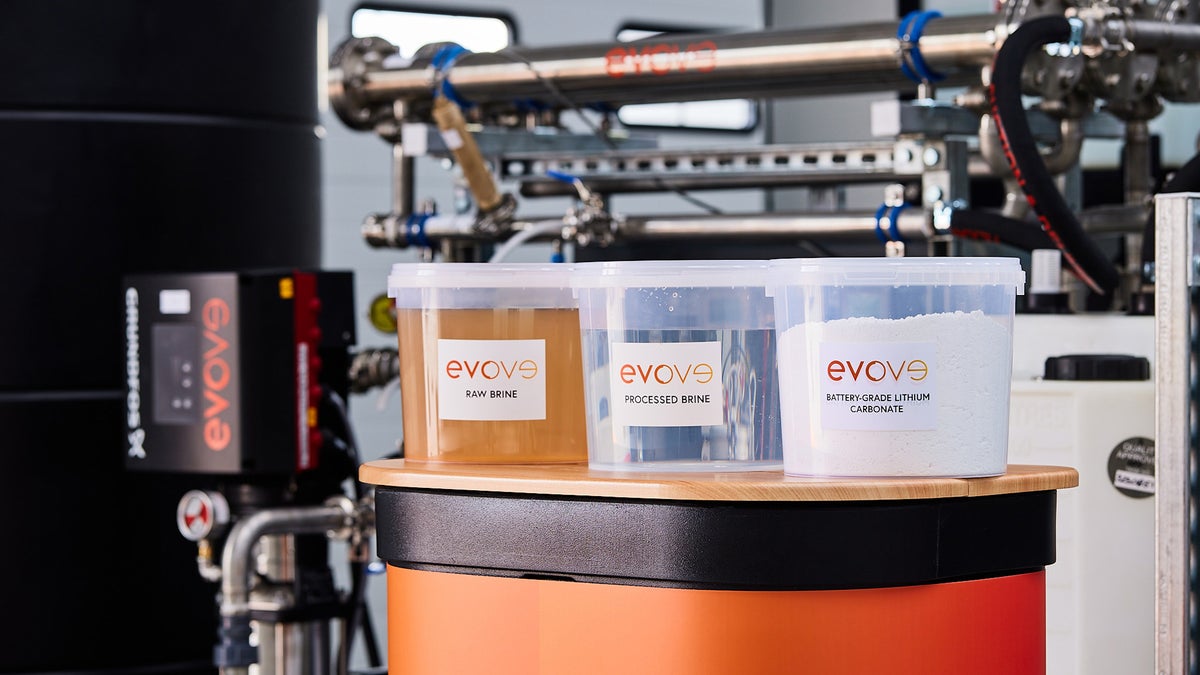
As demand spikes for lithium-ion batteries in cars and at power plants, Evove’s biggest business opportunity is lithium extraction. In Chile, where it’s planning another pilot, the tech could be used to filter lithium directly out of underground lakes, avoiding the use of environmentally damaging evaporation ponds. At Evove’s U.K. headquarters, it’s also filtering lithium out of brine from geothermal plants and wastewater from the oil industry. The company also plans to soon begin working with partners at the Salton Sea in California, where aquifers hold enough lithium to supply as much as 40% of global demand.
A new version of the filter will be even more precise, with new 3D-printed membranes that are designed for each application. That can save even more energy since materials will flow through them more efficiently, and make more applications possible—like a home water filter that never needs to be changed.


