

[ad_1]
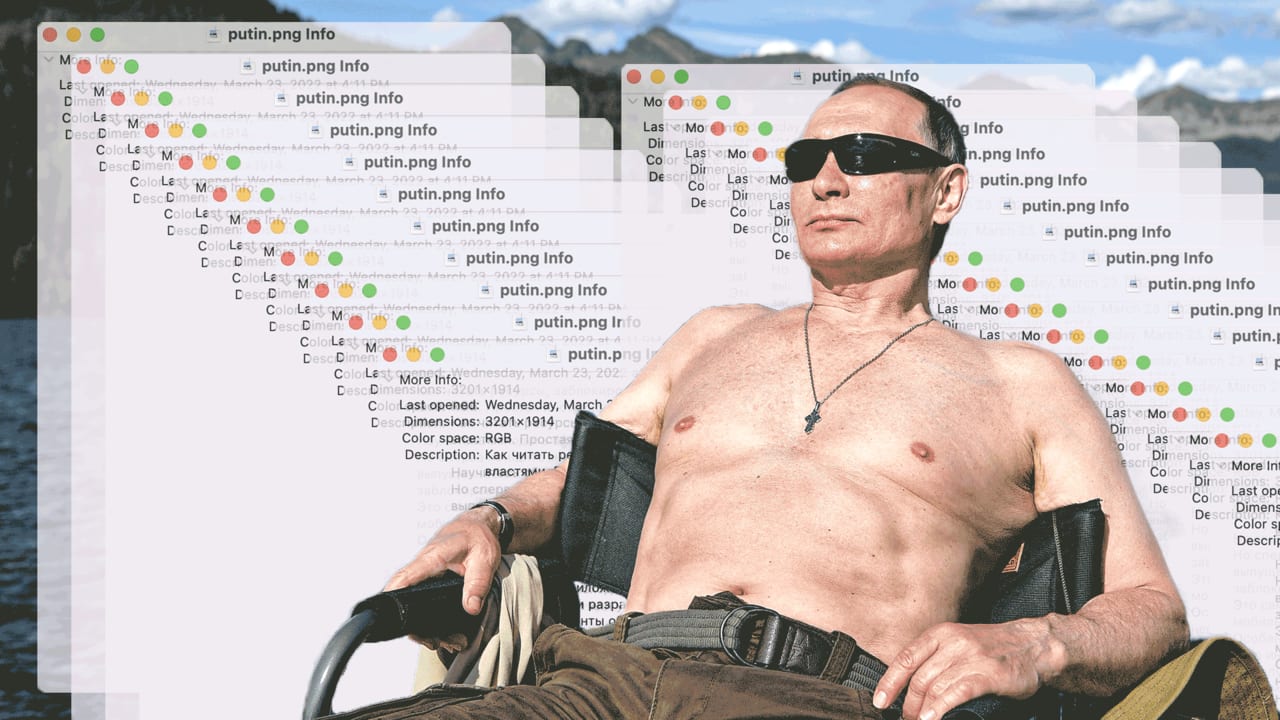
It looks like a photo of Vladimir Putin baring his chest. But hidden in the metadata—the written data in the PNG or JPEG file—are Russian-language instructions for how to avoid censorship and access accurate news about the war in Ukraine.
The photo is part of a project called .PNG Protests, which also explains how anyone can easily edit a photo to share critical information at a time when many people in Russia still don’t know the truth of what’s happening in Ukraine, and a recently passed law threatens anyone who shares “fake” information about the military with 15 years of prison time.
A Los Angeles-based creative agency was inspired to hide information in photos after reading a brief from Ukrainian creatives calling for help from the rest of the world. “One of the points on that brief that caught our attention was finding ways to subvert Russian censorship,” says Brian Farkas, cofounder of the agency B&T Creative. “We started talking about different ideas, and it really just hit in a flash—I come from an art direction background and have photography experience—that we could maybe hide messages in the metadata.”
Others are trying to share news with Russians in multiple other ways, from pop-up messages and ad tech to using lottery numbers as a code on social media.
Editing metadata is simple for anyone with Photoshop; you just need to open the file info and add text to the description. At the other end, the recipient just needs to be told to right-click on the image and open “get info” or “properties” to read the details inside. The text can bypass surveillance by censors monitoring emails and phones.
Farkas and cofounder Tylynne McCauley started by sharing a guide from Meduza, a Russian- and English-language news site based in Latvia, about how to access news in Russia through VPNs, mobile apps, the Tor browser, and other tools that can bypass blocks. But they’re hoping that anyone contacting colleagues and friends in Russia will start to use the same approach. “This can really be used to send any information discreetly, from news to organizing information to anything subverting the regime,” Farkas says.
[ad_2]
Source link


