

Anthropic is setting up a “presidential engagement” program ahead of the 2028 elections, building an in-house team that will work directly with U.S. presidential candidates from both parties on AI issues, help Anthropic’s leadership set political strategy, and run the company’s political funding program.
The effort—which is taking shape before the November midterm elections and an impending initial public offering that could value Anthropic at as much as $2 trillion—underscores the extent to which government policy, and the support of the White House in particular, have become critical to the AI industry.
Anthropic is hiring a Political Programs lead to spearhead the effort and build the team. The person will “build and run Anthropic’s presidential engagement program for the 2028 cycle,” according to the job description that the company posted recently. The person in the role will “map the prospective fields in both parties, offer AI policy education to candidates and their advisors on equal terms, prepare Anthropic’s executives for those conversations, and plan ahead for the platform, convention, and transition periods.”
“Decisions made over the next two years will shape the future enormously,” reads the job description. “We want every serious candidate and elected official, in both parties, to understand the technology and the case for governing it well.”
Tech companies lobbying the government is established practice—and OpenAI is similarly hiring a U.S. Congressional Lead to advance its legislative priorities—but Anthropic’s plan to create a dedicated in-house program to engage with presidential candidates struck some experts as unusual.
“Companies have relationships with presidential campaigns through their government affairs people. Corporate people can be involved on the fundraising side and on the policy side,” said Bruce F. Freed, the president of the non-partisan Center for Political Accountability. “But I’ve not seen such as formalized engagement through a presidential election engagement committee. My reading is this is an AI company effort aimed at shaping or staving off government regulation or oversight.”
Anthropic did not immediately respond to our request for comment.
Anthropic’s relationship with the Trump administration has been particularly rocky. In March, the Department of Defense designated Anthropic as a “supply chain risk” after the company clashed with the Pentagon over the ways its technology could be used by the military.
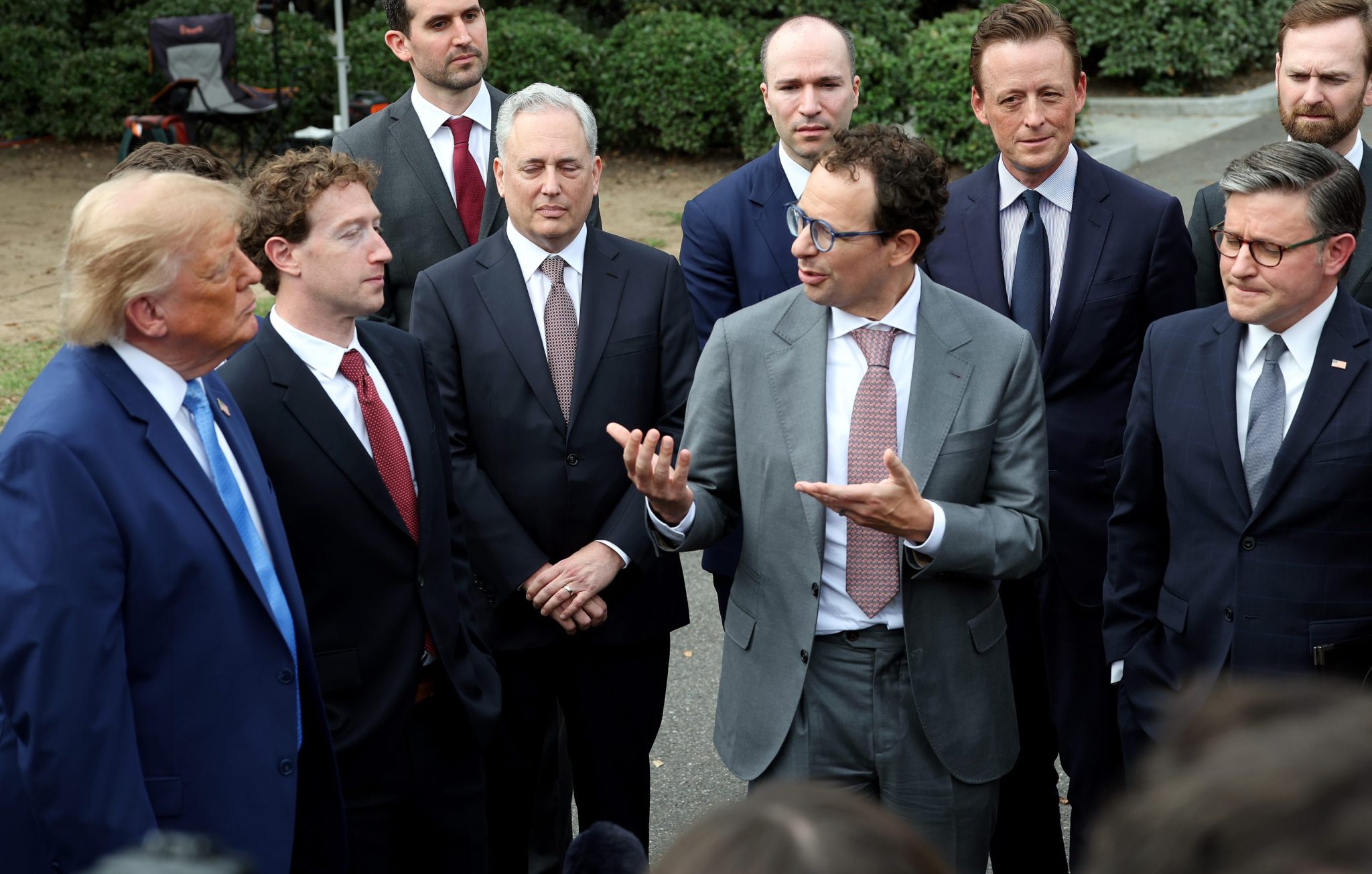
Dario Amodei, the CEO and cofounder of Anthropic, has called for slowing the pace of the AI development in order to shore up safeguards and has been a vocal advocate for government regulation of AI. That view is not shared by President Trump, who has stridently rejected any regulation that could cause the U.S. to fall behind China in the AI race. Last week, Amodei attended a White House event with several other AI industry CEOs and signed an accord committing to self-regulation.
“Consider this their start of developing relationships with whomever will be in the White House in 2029,” said Katie Harbath, founder and CEO of Anchor Change, a tech policy advisory firm, said of the Anthropic’s presidential engagement program.
Sen. Alex Padilla (D-Calif.) said Anthropic’s search for a Political Programs lead is “a reminder that the companies building frontier AI models are also building political operations alongside their products.”
While companies have a right to participate in the country’s democracy and to educate policymakers about how AI technology works, “education and influence are not the same thing, and the public deserves to know where one ends and the other begins,” Padilla told Fortune in a statement urging Anthropic to share more details about the program.
“It’s important that the rules for AI be set by elected representatives accountable to voters, informed by industry and by independent experts, researchers, and affected communities, and not by whichever company has the best-resourced political program,” Padilla said.
Politics is an open part of Anthropic’s DNA, while OpenAI’s influence is subtler
Anthropic is already politically active, and sees itself as “equal parts research lab, policy think tank, and technology company,” according to the job description, which stresses that it political participation is bipartisan.
In contrast to the Center for Political Accountability’s Freed, Harbath, the Anchor Change CEO, said that Anthropic’s Political Programs role did not strike her as unusual. “It sounds a lot like what my job at Facebook was and that a lot of other companies have,” said Harbath, who served as Public Policy Director at Facebook for 10 years. “What’s unusual about it is that it includes running the political action committee (PAC) money. Usually that was a separate thing.”
In addition to candidate education and grassroots organizing, the role calls for running “the day-to-day of Anthropic’s political giving,” and helping employees who “choose to participate in politics do so in an informed way.”
In April, Anthropic set up its first employee-funded political action committee (PAC), called AnthroPAC, which allows employees to contribute up to $5,000 per year, a legal cap. Other tech companies also have PACs, such as MetaPAC, and AmazonPAC.
Individuals at tech companies can donate much more outside of their capped PAC contributions, and with Anthropic’s upcoming IPO, its employees will likely have even deeper pockets for political spending. In July, CEO Dario Amodei donated $1 million to a pro-AI regulation super PAC called Public First in July, Politico reports. Other employees have also given hundreds of thousands of dollars to Public First and other political advocacy groups.
OpenAI does not have any employee-funded PACs, a company policy it highlighted in a June 2026 blog post. Instead, OpenAI leadership has made personal political donations and attempts to curry favor with the Trump administration. CEO Sam Altman donated $1 million to Trump’s inauguration fund in 2024. In early 2025, he posted on X that Trump “will be incredible for the country in many ways!”
OpenAI president Greg Brockman donated $25 million to the pro-AI super PAC Leading the Future, although he cancelled his next planned $25 million donation after employee backlash, including employees setting up a rival super PAC to advocate for stricter AI safety laws.
Bipartisan support for AI regulations
The broader context outside of Anthropic’s new role is also relevant, with AI being an increasingly hot political topic on both sides of the aisle.
“AI is already a big issue in 2026 and I think it will become even more prominent in 2028,” said Sarah E. Kreps, a John L. Wetherill Professor, and the Director of the Tech Policy Institute at Cornell University. She expects the conversation to move from “in the abstract” to real-world concerns such as “jobs, data centers, and privacy.”
While Anthropic is likely looking to improve relations with the current and future administration, Harbath noted that it may be difficult for Anthropic to earn trust with both political parties. “Most companies hire people with Democratic and Republican backgrounds for a reason—the campaigns trust people who come from their party and understand how they work.”
Anthropic’s Political Programs Lead role calls for someone with 12 or more years of experience working in campaigns, party committees, or political organizations, with senior-level experience in national politics, and “a record of working credibly with both parties.”
Still, Harbath expects the role, which lists a salary range of between $295,000 and $345,000, will be challenging for whoever takes it, and high pressure.


