

Dragonfly’s managing partner, Haseeb Qureshi, called Ethereum researcher Justin Drake’s “bunker mode” warning “cryptographic doomerism,” and said migrating tokens to fresh addresses was not a real solution against the threat of artificial intelligence breaking cryptographic signatures.
“Bunker mode” would only protect investors’ coins as long as they weren’t moved from the fresh address, wrote Qureshi in a Thursday X post, adding that these coins would be “worthless if all of the other coins are being hacked and mass-sold.”
Instead, Qureshi urged blockchain networks to adopt proactive measures to protect users against the event of AI breaking cryptographic signatures. He proposed a “Cryptographic Recovery Mode,” a hash-based backup signature plan that users could map to their addresses, enabling validators to force recovery if cryptographic signatures were broken.
The possibility of AI models or quantum computers breaking cryptographic signatures may threaten more than 31% of the Bitcoin supply, as 6.26 million Bitcoin (BTC) currently sit in vulnerable addresses, according to Glassnode.
Of the 6.26 million BTC, about 4.33 million are exposed because of address reuse; moving these coins to a fresh address would end the exposure. Another 1.94 million BTC are exposed through their address format, wrote Glassnode co-founder Rafael Schultze-Kraft in a Thursday X post.
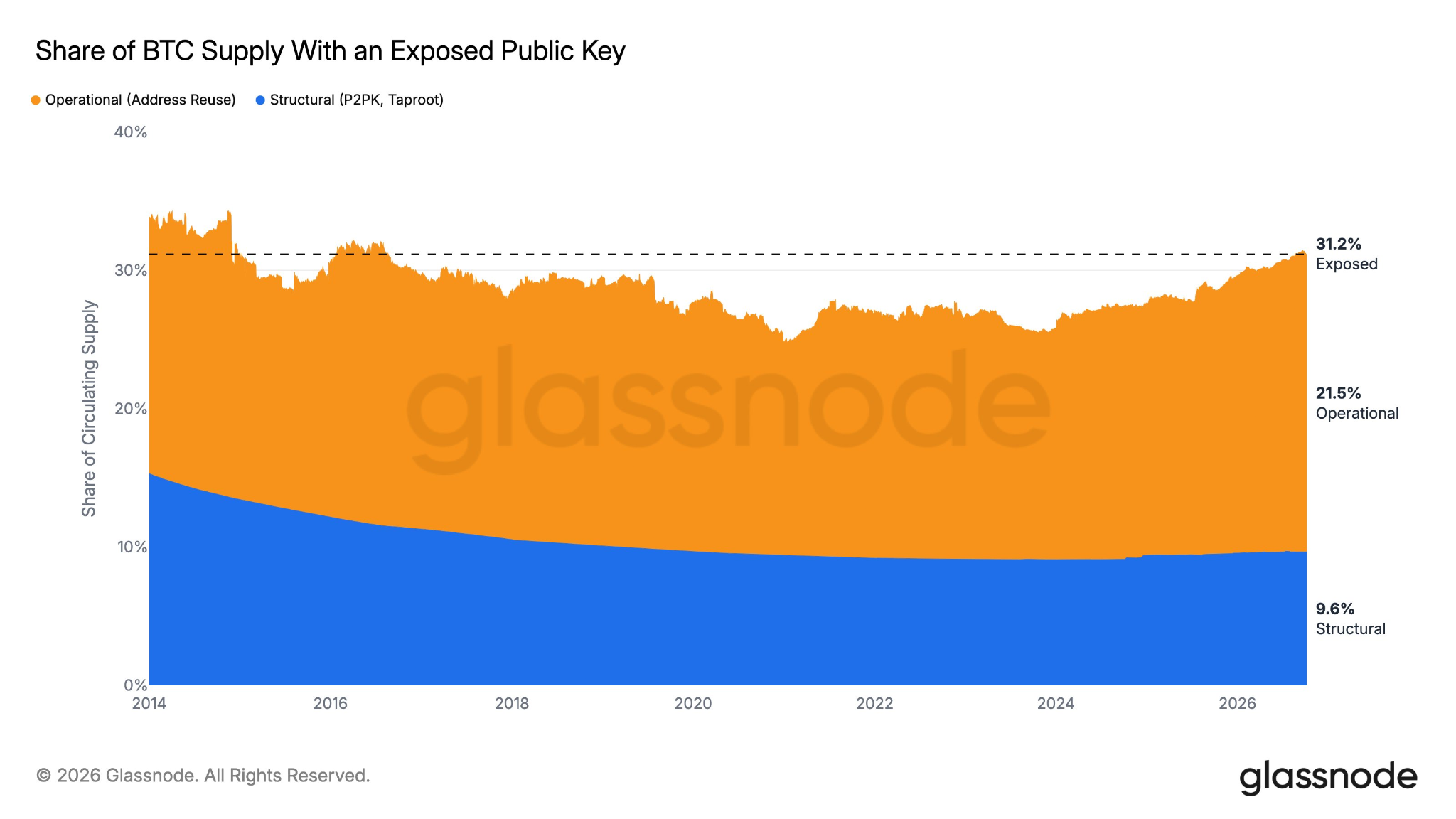
Share of BTC supply with exposed public keys. Source: Rafael
Of the total exposed supply, nearly 1.8 million BTC are held on cryptocurrency exchanges, with a total of 57% of all exchange balances currently exposed.
Related: Strategy-led group pledges $15M to quantum-proof Bitcoin network
Ethereum researcher warns AI may break ECDSA signatures in “months, not years”
On Wednesday, Ethereum researcher Justin Drake warned that rapid AI advancements could break the elliptic curve digital signature algorithm (ECDSA) securing cryptocurrency wallets sooner than previously expected.
“It is now reasonable to brace for the possibility that ECDSA breaks before qday, in the worst case, in months, not years,” wrote Drake in a Wednesday X post, citing a Tuesday OpenAI report on AI’s progress in mathematics.
Drake advised users to gradually migrate their funds to fresh wallets where their public key is not exposed, arguing that AI advancements may threaten these holdings before quantum computers.
Ethereum co-founder Vitalik Buterin agreed that the industry should take the risks from “AI-accelerated math seriously” but said that he doesn’t recommend users rush to move their funds to fresh wallets.
Magazine: Bitcoin’s quantum upgrade path: What BIP-360 changes and what it does not


