

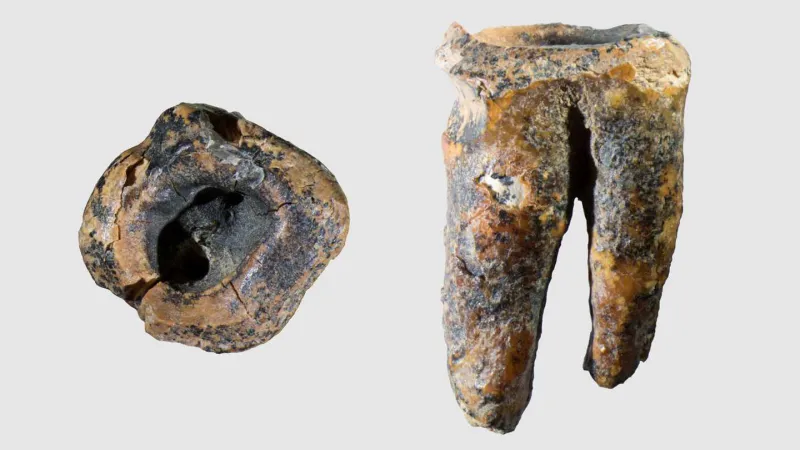
An ancient human molar shows that Neandertals sometimes drilled out infected teeth with stone tools — suggesting they may have known the treatment could ease extreme tooth pain.
The 59,000-year-old tooth was unearthed from the Chagyrskaya Cave in the Altai Mountains of Siberia. It is the oldest evidence of primitive dentistry ever found, eclipsing the old record by more than 40,000 years, researchers report in PLOS One.
It is also the first time any evidence of tooth surgery has been discovered in hominids other than modern Homo sapiens. The find “suggests both the manual dexterity and cognitive capability” needed for Neandertals to successfully carry out such an operation, says archaeologist John Olsen, an anthropologist at the University of Arizona in Tuscon.
The molar was found deep in sediment in 2016, but its importance was only recently recognized. It has a massive hole that has been drilled from the chewing surface to the pulp cavity near its roots. Microscopic analysis indicates the hole was drilled by a stone tool, and the condition of the remaining tooth suggests the ancient dental operation was performed to remove infected tissue — decaying enamel and material from the inner tooth.
Examinations of the drilled-out tooth also revealed a groove made by pieces of wood used as toothpicks, likely to ease the pain of the infection. Another Neandertal tooth from the same cave shows its owner also suffered from tooth decay.
The hole in the drilled-out tooth was probably made by a sharp stone tool, Olsen and colleagues say. The tool, a few centimeters long and very thin, would have been twirled between the fingertips of the primitive dentist.
The drilled-out tooth is further evidence of the importance of community to Neandertals, says Bruce Hardy, an anthropologist at Kenyon College in Gambier, Ohio, who was not involved with the study. Previous studies had found the remains of injured Neandertals who must have been cared for by others in their group, and the new study suggests the primitive dental operation must have been carried out by someone other than the patient.
“This new find at Chagyrskaya … is clearly evidence of a deliberate, planned intervention in an effort to relieve pain,” Hardy wrote via email.
Hardy champions the idea that Neandertals were not so very different in behavior from modern humans . “Given our increasing understanding” of Neandertals’ cognitive abilities, “dentistry is not really that surprising,” he says.
The authors of the latest study, too, suggest the evidence of Neandertal dentistry is a sign they were fairly sophisticated: The Neandertals involved would have had to identify the tooth decay as the cause of the pain, and understand that it could be treated effectively by drilling it out.
Original Source Link


