

By 1988, Howard Bloom had built one of the most powerful publicity operations in the history of popular music. His firm, The Howard Bloom Organization, represented Michael Jackson, Prince, Bob Marley, Billy Joel, Kiss, Run DMC, Joan Jett, Aerosmith and a long list of other legends. He was fast, tireless and seemingly everywhere at once. Then, almost overnight, he could barely get out of bed.
That year, Bloom was struck by chronic fatigue syndrome, an illness that would keep him largely bedbound for roughly fifteen years. For five of those years, he later told The New York Times, he was “too weak to speak,” and so fragile that he could not tolerate another person being in the room with him. The man whose entire career had been built on connection, on crowds and conversations and the electricity of a sold-out arena, was suddenly cut off from nearly all of it.
It is the kind of turn that ends most careers. For Howard Bloom, it became the beginning of a second one.
Long before rock and roll, Bloom had been a scientist at heart. He was captivated by cosmology and microbiology by age ten, and at sixteen he was assisting with immune system research at Roswell Park in Buffalo. The music business had been, in many ways, a detour, though a detour he treated as a living laboratory of mass human behavior. Confined to his home in Brooklyn, with the noise of the industry gone, he returned to the questions that had fascinated him since childhood. What drives human beings to form groups? Why do civilizations rise and fall? How does the universe build complexity out of chaos?
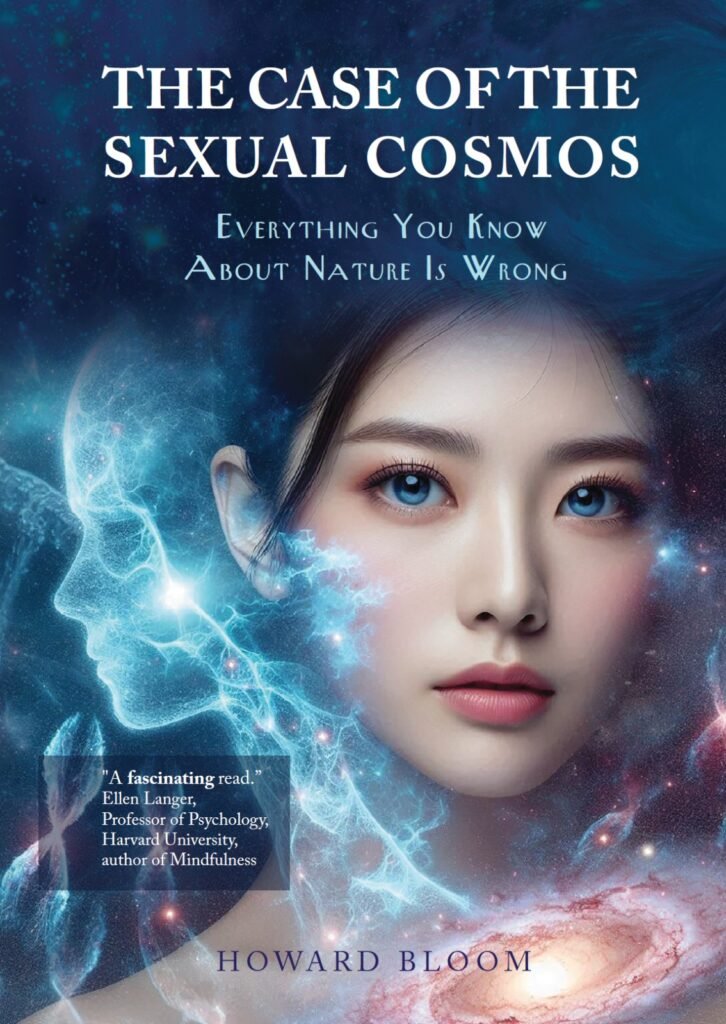
Working in whatever small windows his body allowed, he wrote. The result was The Lucifer Principle: A Scientific Expedition Into the Forces of History, published by the Atlantic Monthly Press in 1995. It was followed in 2000 by Global Brain: The Evolution of Mass Mind from the Big Bang to the 21st Century. All told, Bloom produced three science books during his years of illness, an extraordinary output for someone who, at his lowest point, could not hold a conversation.

Readers who have lived with chronic illness have found something especially meaningful in that work. In The Lucifer Principle, Bloom wrote about isolation as one of the most damaging forces a social creature can face, and some longtime patients have said his description captures the loneliness of being sick, in pain and cut off from the world better than anything else they have read. It was written by someone who knew that experience firsthand.
Bloom approached his own recovery the way he approached everything else, as a scientific problem to be solved. One of his earliest symptoms was insomnia, and rather than fighting it, he listened to it. He concluded that his body did not want eight hours of sleep at once, so he split his rest into two four-hour shifts, a schedule he has described in interviews. Over many years of trial and error, he assembled a regimen of treatments that worked for him, and he has said that today he feels stronger than he did at nineteen.
Even the ordinary rituals of life required a fight. In 2001, when Bloom wanted to marry, the New York City Clerk’s Office refused to issue him a marriage license at home, even though the city made such arrangements for people confined to hospitals, nursing homes and prisons. When the story went public, the city clerk personally came to Bloom’s house to issue the license. The New York Times noted that the office’s rules were likely in breach of the Americans with Disabilities Act. A man who had spent his career turning public attention into change had done it once more, this time on his own behalf.
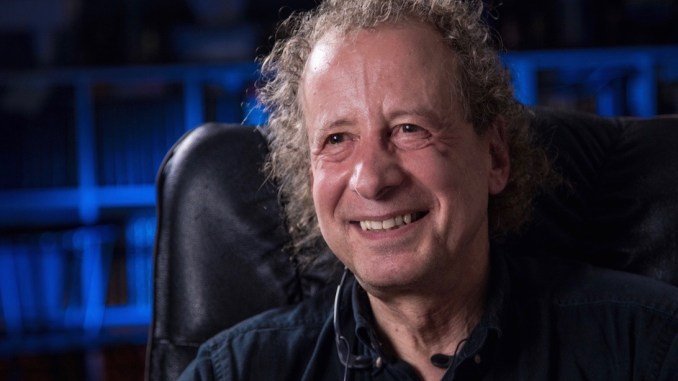
As his strength returned, so did his reach. In 2006 he founded the Space Development Steering Committee, a coalition that has included astronauts Buzz Aldrin and Edgar Mitchell. His book Global Brain became the subject of a 2010 symposium hosted by the Office of the Secretary of Defense. He went on to publish The Genius of the Beast, The God Problem, How I Accidentally Started the Sixties and Einstein, Michael Jackson & Me, and his life became the subject of a documentary, The Grand Unified Theory of Howard Bloom, which premiered at DOC NYC in 2019. He has been recognized as one of the most prominent people to have lived with chronic fatigue syndrome, and he has spoken openly about his illness on podcasts aimed at others facing the same condition.
There is a lesson in Howard Bloom’s story that reaches far beyond rock and roll. Illness took away his voice, his business and nearly every connection he had. It did not take away his curiosity. In the silence of a darkened room, he did what he had always done. He kept asking enormous questions, and he kept searching for answers.
Today, from his home in Park Slope, he still runs online discussion groups and still writes. The world remembers him as the publicist behind Michael Jackson and Prince. But perhaps his most remarkable campaign was the one he waged alone, for fifteen years, to get his own life back.
The official website for Howard Bloom may be found at https://www.howardbloom.net


