

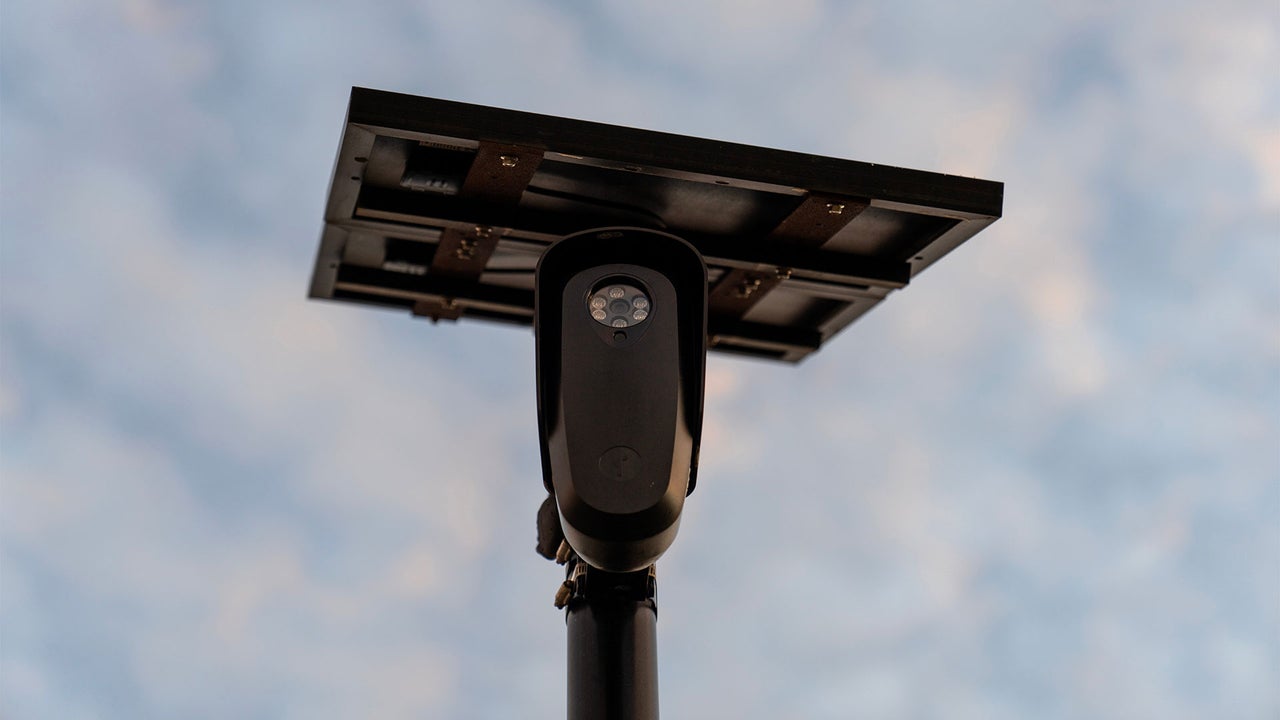
The backlash over the network of surveillance cameras has reached midterms.
Wisconsin’s candidates for governor want to limit them, while Pennsylvania’s say they support a ban. A Michigan congressional candidate called them “un-American.” A Florida Senate candidate is selling merch opposing them.
Across the country and up and down ballots, candidates from both parties are increasingly on the attack over Flock cameras, the AI-powered nationwide network of automated cameras that record license plates and other characteristics of all passing vehicles, allowing law enforcement agencies to search and share that data. Although police say the cameras are an invaluable crime-fighting tool, some critics say their pervasiveness amounts to unconstitutional warrantless mass surveillance.
The cameras sold by Atlanta-based Flock Safety, which the company has said are running in 6,000 communities in every state but Alaska, have become a new campaign issue that candidates and strategists see as part of a backlash against powerful technology companies, connected to broader debates over the future of artificial intelligence and the associated boom in data center construction.
“We’ve seen candidates running on banning them, cutting off funding, or requiring warrants. That’s a credit to activists across the country who have raised concerns about their use,” Michael Soyfer, an attorney for the Institute for Justice, a public interest law firm litigating over the technology, said in a statement.
In response to questions about the cameras as a campaign theme, a Flock spokeswoman emphasized the company’s claims about the power of its technology, saying it helped “solve approximately one million crimes and helped reunite roughly 10,000 missing people with their families.”
“We ask anyone weighing in on this issue to engage with the facts and the record: the crimes solved, the families reunited, the safeguards already in place, and what our technology actually does,” said MoMo Zhou, the company’s vice president of communications. “We ask them to work with the communities using this technology to decide what rules should govern it and not to spread misinformation or ban a critical public safety tool outright that is helping to make communities safer.”


