

A meteorite that streaked over New York City and crashed into a New Jersey rooftop came from an asteroid that once had briny water beneath its surface. The rock may have a similar composition to those that brought water and organic materials to early Earth, researchers report July 15 in Science Advances.
The meteorite lit up the daytime sky and created a sonic boom over the New York metropolitan area on July 16, 2024. The space rock, which was originally about 53 kilograms, entered Earth’s atmosphere at 14 kilometers per second and exploded with an energy equivalent to 1.3 metric tons of TNT.
Shortly thereafter, a 1.35-kilogram chunk of the rock crashed through the roof of a Hillsborough, N.J. house, filling a bedroom with dust and a sulfuric smell. The homeowner “had a brief whiff of how the early Earth would have smelled,” says planetary astronomer Peter Jenniskens of the SETI Institute in Mountain View, Calif., who was on the team that analyzed the meteorites. No one was injured.
Fortuitously, the homeowner picked the fragments up with gloved hands and aluminum foil and immediately placed them in glass jars to isolate them from Earthly contamination.
Most meteorites found on Earth have sat on the ground or in the dirt for an unknown amount of time, so it’s hard to tell apart the rock’s original composition from local detritus. Previous meteorites found on the ground days or hours after landing are scientific treasure troves.
For a rock that fell to Earth on its own, “this is about as good as it gets,” Jenniskens says.
The meteorite is a CM carbonaceous chondrite, thought to be one type of rock that delivered water and organic material to the early Earth. It probably came from a protoplanet that formed just outside the orbit of Jupiter. Studying it could help researchers identify the specific ingredients that created life here.
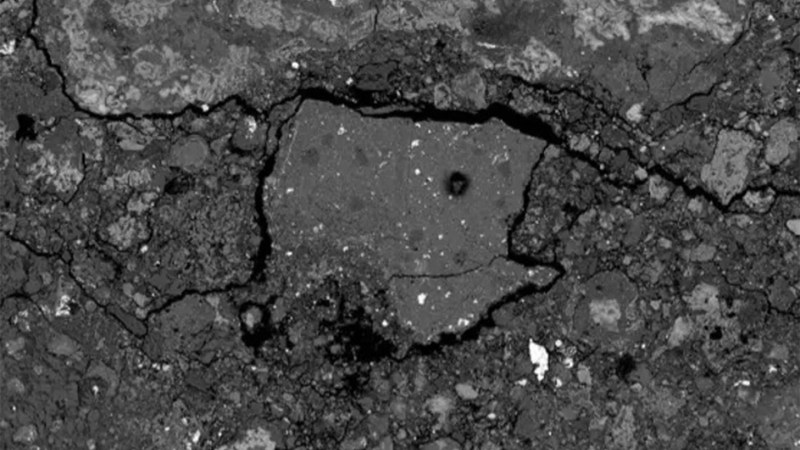
The meteorite contains fragments of material that is rich in sodium compared with materials in similar meteorites, suggesting brines once altered the rock. It also contains organic matter and types of amino acids that are rare on Earth. These molecules probably formed inside the asteroid during a period when salty water allowed complex chemistry to take place.
Jenniskens urges people to not fear a meteorite hitting your own house. Not only is it unlikely to happen, but “it’s a treasure,” he says. “It’s an honor. I think you are very lucky if it happens to you.”


