

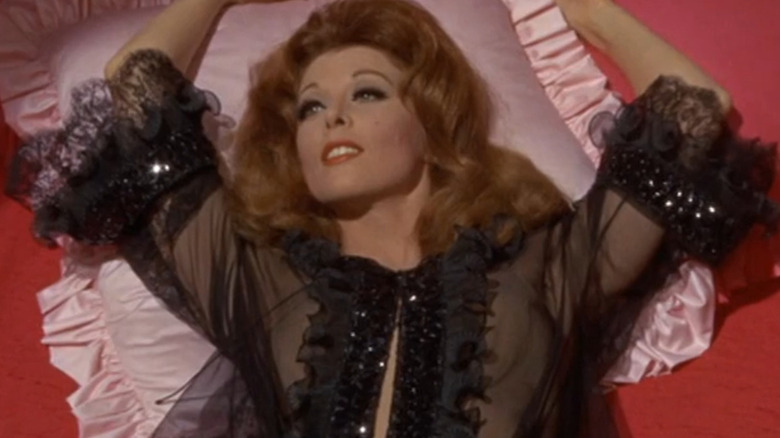
Phil Karlson’s 1968 film “The Wrecking Crew” was the fourth and final Matt Helm movie. It was preceded by “The Silencers” (1966), “Murderers’ Row” (also 1966), and “The Ambushers” (1967). The original Matt Helm spy novels by author Donald Hamilton were notoriously gritty and violent, and the Matt Helm character was a stern, jaded, uncaring spy who always got the job done. In the movies, Matt Helm was played by Dean Martin, and the stories were adapted into goofy, campy, sexy comedy romps. Although very different from the source material, the Matt Helm movies are a blast to watch, and it’s hard not to giggle at Martin’s antics and be dazzled by his unbearably attractive co-stars.
“The Wrecking Crew” spoofed the sexed-up elements of James Bond movies by putting the irascible, drunken Matt Helm in the company of a long string of beautiful women. He is first paired with a clumsy Danish tour guide named Freya (Sharon Tate) as he aims to take down an evil billionaire, Count Contini (Nigel Green). Along the way, Matt faces off against two of the Count’s minions, played by Elke Sommer and Nancy Kwan. He also needs to get some information on the Count from one of his ex-girlfriends, Lola, played by Tina Louise, fresh off “Gilligan’s Island.” The previews for “The Wrecking Crew” sold the movie pretty much on just how gorgeous the four lead actresses were.
“The Wrecking Crew” is well-known to fans of 1960s comedies, but it’s also significant for several other reasons. For one, it featured the cinema debut of a young Chuck Norris. For another, Bruce Lee worked on the movie as a “karate advisor.” And lastly, it was the final film of Sharon Tate before her tragic death in 1969.
The Wrecking Crew is historically significant for multiple reasons
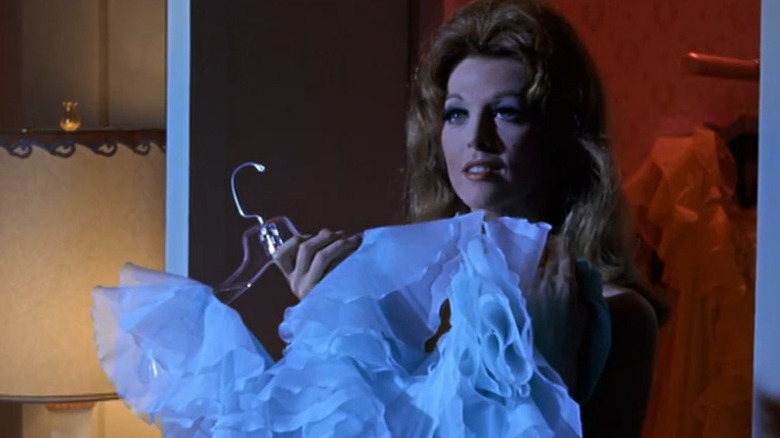
There is a scene in “The Wrecking Crew” wherein Matt Helm has to go to a fancy lounge where villains hang out called the House of 7 Joys in order to meet Nancy Kwan’s character, Wen Yurang. Helm has to surrender his gun to a stern guard, and even though one can only see the back of his head at first, one can tell that it is none other than Chuck Norris. Later in the scene, a wall opens, and Matt Helm faces four unsavory characters, including Elke Sommer and, standing to the right, Norris, sans beard. A fight soon breaks out. Sadly, Norris files out without throwing any punches.
Norris passed away in 2026 at the age of 86. He starred in many, many fun B-movies as well as “Walker: Texas Ranger.”
Bruce Lee doesn’t appear in “The Wrecking Crew,” but he served as a martial arts coordinator on the movie. He was credited as a “karate advisor,” but we’d just call that a fight choreographer today. Bruce Lee had, of course, been appearing in movies all his life, starting with “Golden Gate Girl” in 1941, when he was just an infant. He appeared in a small pile of action films in Hong Kong through 1960, and moved to American TV in 1966, appearing as Kato in “The Green Hornet.” That series only lasted one season, however, giving Lee the leeway (heh) to start working on American feature films. “The Wrecking Crew” was his first American production and, in due course, led to the five giant action movies that Lee would become better known for.
Bruce Lee passed away in 1973 at the age of 32.
Rest in Peace to Chuck Norris, Bruce Lee, and Sharon Tate
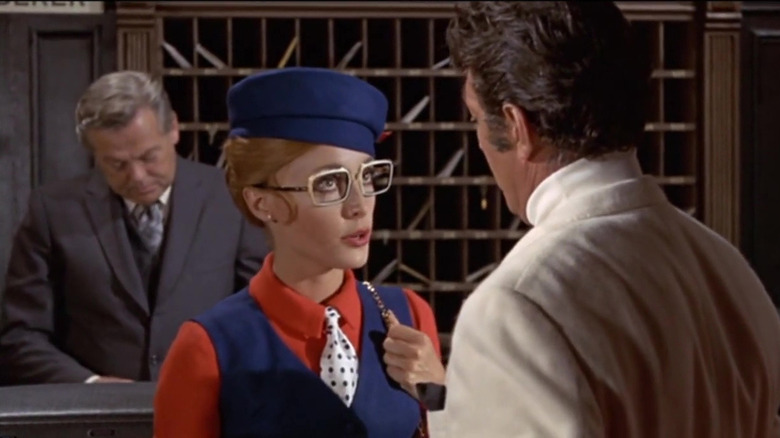
The character of Freya plays a major role in “The Wrecking Crew,” and she is played by Sharon Tate, an up-and-coming starlet who had made her film debut in “Barabbas” in 1961. She got her big break in 1963, appearing in 15 episodes of “The Beverly Hillbillies,” and also turned up in hit shows like “Mister Ed” and “The Man from U.N.C.L.E.” In 1967, she appeared in the vampire comedy “The Fearless Vampire Killers, or Pardon Me But Your Teeth Are in My Neck,” directed by Roman Polanski. 1967 also saw Tate appearing in “Don’t Make Waves,” and the amazing drug melodrama “Valley of the Dolls.” “The Wrecking Crew” was released in the United States in February of 1969.
Tate married Roman Polanski in 1968 and took a break from acting while pregnant. She would never have her child, however, as she was infamously murdered by the Manson Family on August 9, 1969. The Manson Family murders are so infamous that they have been the subject of many movies and documentaries, and many historians cite them as the end of Hollywood’s Golden Age. In 2019, Quentin Tarantino nearly dramatized the murders in his film “Once Upon a Time… in Hollywood,” in which Margot Robbie played Tate. In Tarantino’s version of things, though, the murders were stopped by a fictional stuntman (played by Brad Pitt) and a fictional TV Western star (played by Leonardo DiCaprio). In that film’s parallel universe, Tate survived. For Tarantino, the Golden Age was allowed to die of natural causes.
Tate made one more film called “The Thirteen Chairs,” which also starred Orson Welles, and it was released after her death. “The Wrecking Crew” was the last one released in her lifetime.


