Scientists have sequenced the genomes of three Late Stone Age people who lived in Europe 30,000 years ago and discovered that they had closer biological ties than researchers previously thought. The new finding suggests that places like southwestern France may have been critical cultural hubs during the last ice age.
Shortly after Neanderthals disappeared from Europe, a Stone Age culture known as the Gravettian spread across the continent. Artifacts found during archaeological excavations — including portable art, such as “Venus figurines” — have shown that the Gravettian culture lasted from about 34,000 to 25,000 years ago. But ancient DNA has been recovered from only two dozen human skeletons from the Gravettian period, so questions about these people’s ancestry remain unanswered.
Based on the small number of genomes from Gravettian people that were previously sequenced, experts believed that groups in Western Europe were largely separate from groups in Eastern Europe. But in a study published Oct. 23 in the journal Science Advances, researchers sequenced the genomes of three people who lived in what are now Spain, France and Italy during the Gravettian period. They discovered that one person had mixed genetic ancestry that revealed East-West exchange at least 30,000 years ago.
Latest Videos FromLive Science
“Our results show that eastern and western European populations were not as genetically isolated as previously assumed,” study first author Pere Gelabert, an evolutionary anthropologist at the University of Vienna, said in a statement.
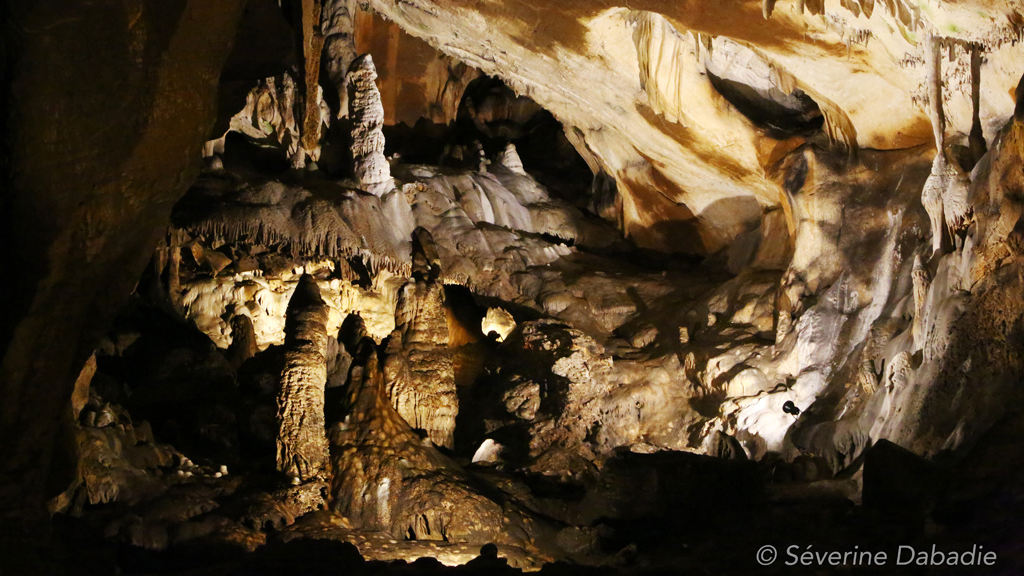
The new information about mixed ancestry comes from a woman who died around 30,000 years ago and whose bones were found in Isturitz Cave in southwestern France. Originally used by Neanderthals, Isturitz Cave was occupied off and on from about 80,000 to 10,000 years ago. Cups made out of human skulls dated to roughly 15,000 to 12,000 years ago have also been found in Isturitz Cave.
Researchers found that the DNA from the Gravettian woman in Isturitz Cave was most similar to the previously known Western European genomes, but with an intriguing connection to Eastern and Central European groups.
This discovery of gene flow from the East is uncommon for the Late Stone Age, also known as the Upper Paleolithic, the researchers wrote in the study. It “could be explained by movements of people from Eastern Europe during the Gravettian period, which eventually contributed to this ancestry in Isturitz.” Specifically, the researchers dated this “pulse” of gene flow to about 31,500 to 32,500 years ago.
Get the world’s most fascinating discoveries delivered straight to your inbox.
The DNA evidence supports the archaeological theory that Isturitz Cave was an important cultural and biological hub for tens of thousands of years during the Late Stone Age, as the cave was located at a critical passage between continental Europe and the Iberian Peninsula, the researchers wrote.
All three newly sequenced Gravettian genomes revealed close biological connections to Western European groups, as well as genetic traits suggesting they had dark skin, dark hair and dark eyes. What’s more, all of them had parents who weren’t closely related to each other, suggesting that those populations may have actively avoided inbreeding.
“Overall, our results suggest that population structure and gene flow in western Europe during the Gravettian were more complex and dynamic than previously assumed,” the researchers wrote.
Gelabert, P., Sawyer, S., Villalba-Mouco, V., Cheronet, O., Oberreiter, V., Gárate, D., Normand, C., Straus, L. G., González Morales, M. R., Gutiérrez-Zugasti, I., Cuenca-Solana, D., Darricau, J., de Lumley, H., Tejero, J.-M., Stahlschmidt, M., Higham, T., Giannì, M., van der Sluis, L. G., Gómez-Montes, C., … Pinhasi, R. (2026). Early Gravettian genomic data from Western Europe reveal population movements before the LGM. Science Advances, 12(43). https://doi.org/10.1126/sciadv.aeh6128
We use cookies on our website to give you the most relevant experience by remembering your preferences and repeat visits. By clicking “Accept All”, you consent to the use of ALL the cookies. However, you may visit "Cookie Settings" to provide a controlled consent.
This website uses cookies to improve your experience while you navigate through the website. Out of these, the cookies that are categorized as necessary are stored on your browser as they are essential for the working of basic functionalities of the website. We also use third-party cookies that help us analyze and understand how you use this website. These cookies will be stored in your browser only with your consent. You also have the option to opt-out of these cookies. But opting out of some of these cookies may affect your browsing experience.
Necessary cookies are absolutely essential for the website to function properly. These cookies ensure basic functionalities and security features of the website, anonymously.
Cookie
Duration
Description
cookielawinfo-checkbox-analytics
11 months
This cookie is set by GDPR Cookie Consent plugin. The cookie is used to store the user consent for the cookies in the category "Analytics".
cookielawinfo-checkbox-functional
11 months
The cookie is set by GDPR cookie consent to record the user consent for the cookies in the category "Functional".
cookielawinfo-checkbox-necessary
11 months
This cookie is set by GDPR Cookie Consent plugin. The cookies is used to store the user consent for the cookies in the category "Necessary".
cookielawinfo-checkbox-others
11 months
This cookie is set by GDPR Cookie Consent plugin. The cookie is used to store the user consent for the cookies in the category "Other.
cookielawinfo-checkbox-performance
11 months
This cookie is set by GDPR Cookie Consent plugin. The cookie is used to store the user consent for the cookies in the category "Performance".
viewed_cookie_policy
11 months
The cookie is set by the GDPR Cookie Consent plugin and is used to store whether or not user has consented to the use of cookies. It does not store any personal data.